
ASG Patrick Tay Take On Change Leadership & Management In The Age Of Disruptions And Transformation
In the face of disruptive changes such as digitalization and automation, job roles and processes are fast changing. Under the S$4.5 billion Industry Transformation Programme, 23 Industry Transformation Maps (ITM) were developed to help industries adapt and grow in the evolving economic landscape. To help organizations cope with changes, NTUC LearningHub partnered Kotter International to deliver Change Leadership & Management Masterclasses in Singapore. In one of our first few Masterclasses, our participants were pleasantly surprised when NTUC Assistant Secretary-General (ASG) Patrick Tay paid a visit! We also took the chance to interview him on his take on change leadership and management in the age of disruption and transformation.
Who is John Kotter? Why Is He A Leader In Change Leadership & Management?
Before we pick ASG Patrick’s brains on Change Leadership & Management. It is important for you to be acquainted with Dr. John Kotter and his lifelong research on change and transformation. Dr. John Kotter set out in 1972 to answer the question: What makes transformational change efforts succeed or fail? Over the decades, he studied hundreds of organisations. His empirical research revealed eight common elements that are universally present across all successful transformations. The Kotter 8-Step Process for Leading Change was born, followed by Kotter International to translate the research to impact. Kotter works with organisations to help them overcome the barriers to leading complex change. With decades of real-world research honed in the field alongside partners, Kotter International expertly guided and converted the energy of organisation’s greatest asset— the people— into action, momentum and results.

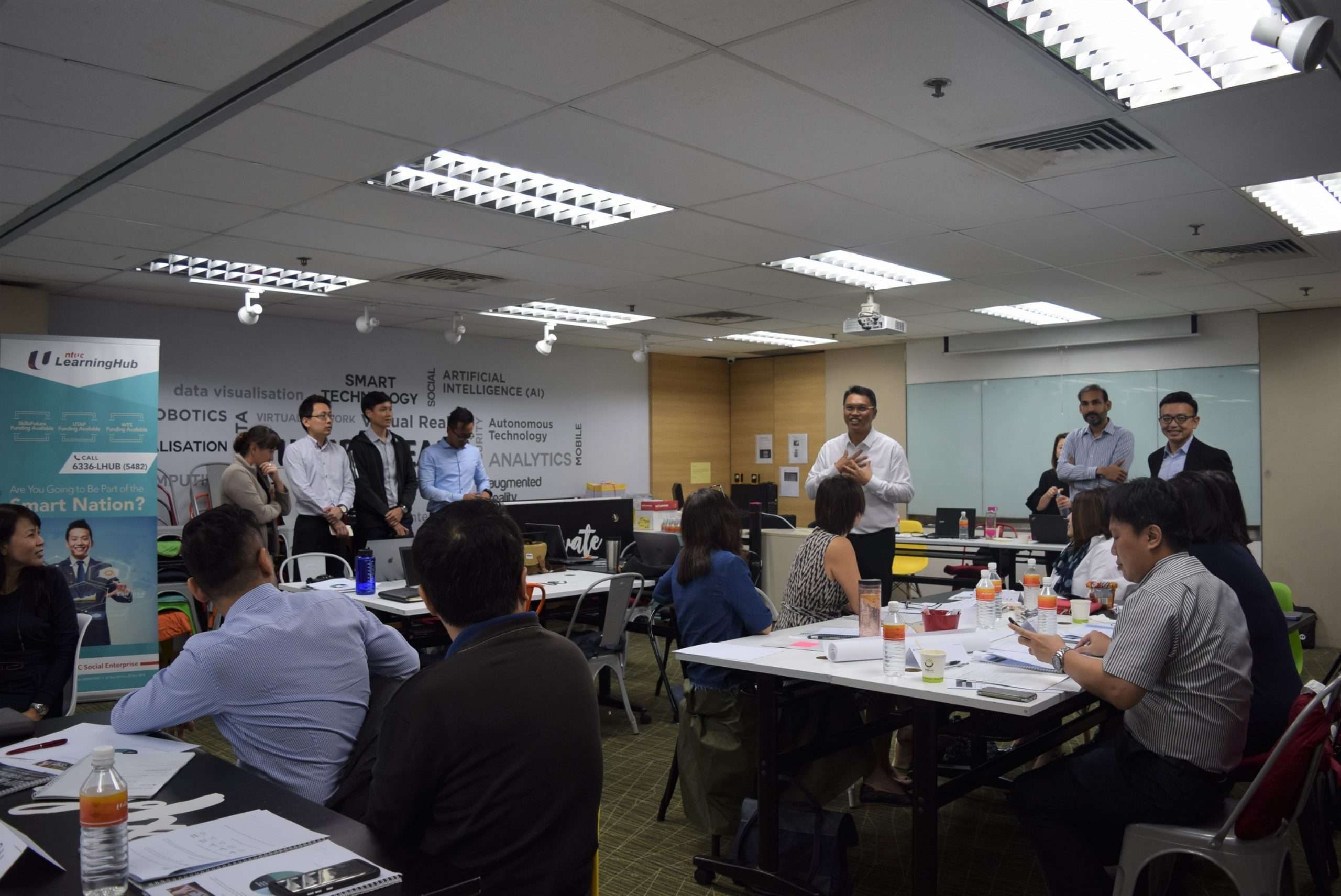
Assistant Secretary-General Patrick Tay Visits John Kotter Change Leadership & Management Masterclass
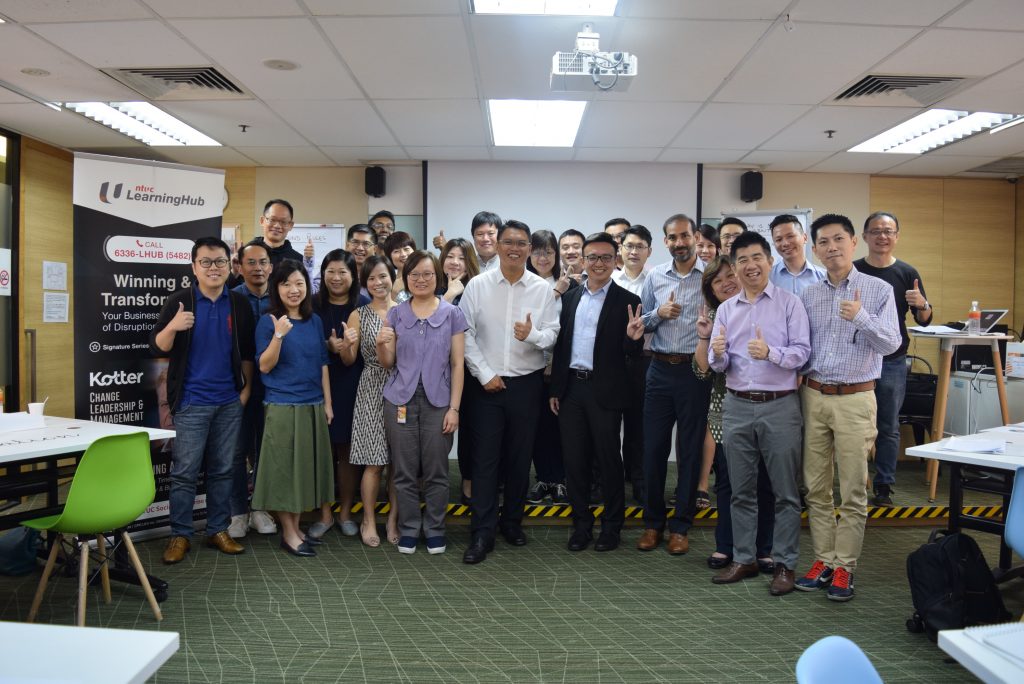
NTUC ASG Patrick Tay paid a surprise visit to one of our first John Kotter Change Leadership & Management Masterclass on 25 April 2018! He highlighted some of the potential challenges faced by organisations who are looking to or in the process of introducing transformations. He also shared useful tips on how to garner both internal and exterior stakeholder support to implement transformation successfully. Check out what he has to share on change management in this age of disruption and transformation!
1) What are some of the key challenges faced by organisations in today’s fast-changing business world? Do you think they are prepared for these challenges, especially the Small and Medium-sized Enterprises (SMEs)?
ASG Patrick: Technology, Digitalisation, Disruption, Robotisation, AI and IOT are taking all sectors by storm. The key difference between this 4th Industrial Revolution and the previous ones is the speed and pace of change. It is imperative for all organisations and their people to be prepared for these changes which are going to impact all organisations especially our SMEs.
2) Will introducing skillsets such as change management be crucial in enabling organisations to adapt nimbly to changes?
ASG Patrick: Yes because with a volatility, uncertainty, complexity, and ambiguity (VUCA) operating environment, only organisations that are able to stay agile and adaptable can negotiate, navigate and ride the waves of change better.
3) How do you envision the various tripartite partners to work together to prepare organisations and their employees for change and transformation?
ASG Patrick: Each of the tripartite partners has their respective roles to play. The government must provide the help/support, eco-system and funding for the training. Unions and workers must stay positive and be pro-active when it comes to embracing training and lifelong learning. Last but not least, employers must do their part to encourage and motivate their workers through various interventions and support mechanisms to make regular learning, training and upgrading a key initiative.
4) Do you think the partnership between NTUC LearningHub and Kotter International is a good start and will fit into the Labour Movement plans to help organisations and their employees adapt and grow?
ASG Patrick: This is a great start to kick off. Such best-in-class training will help build the capabilities of organisations to lead and manage change and transformations such that the training needs and morale of every employees are well taken care of.
A Preview Of John Kotter Knowledge At Keynote Seminar
To help employees adapt and transform their skill sets, NTUC LearningHub invited 200 participants from corporate MNCs, SMEs, government agencies and NTUC social enterprises to John Kotter Change Leadership & Management Keynote Seminar on 24 April 2018 at NTUC Centre.
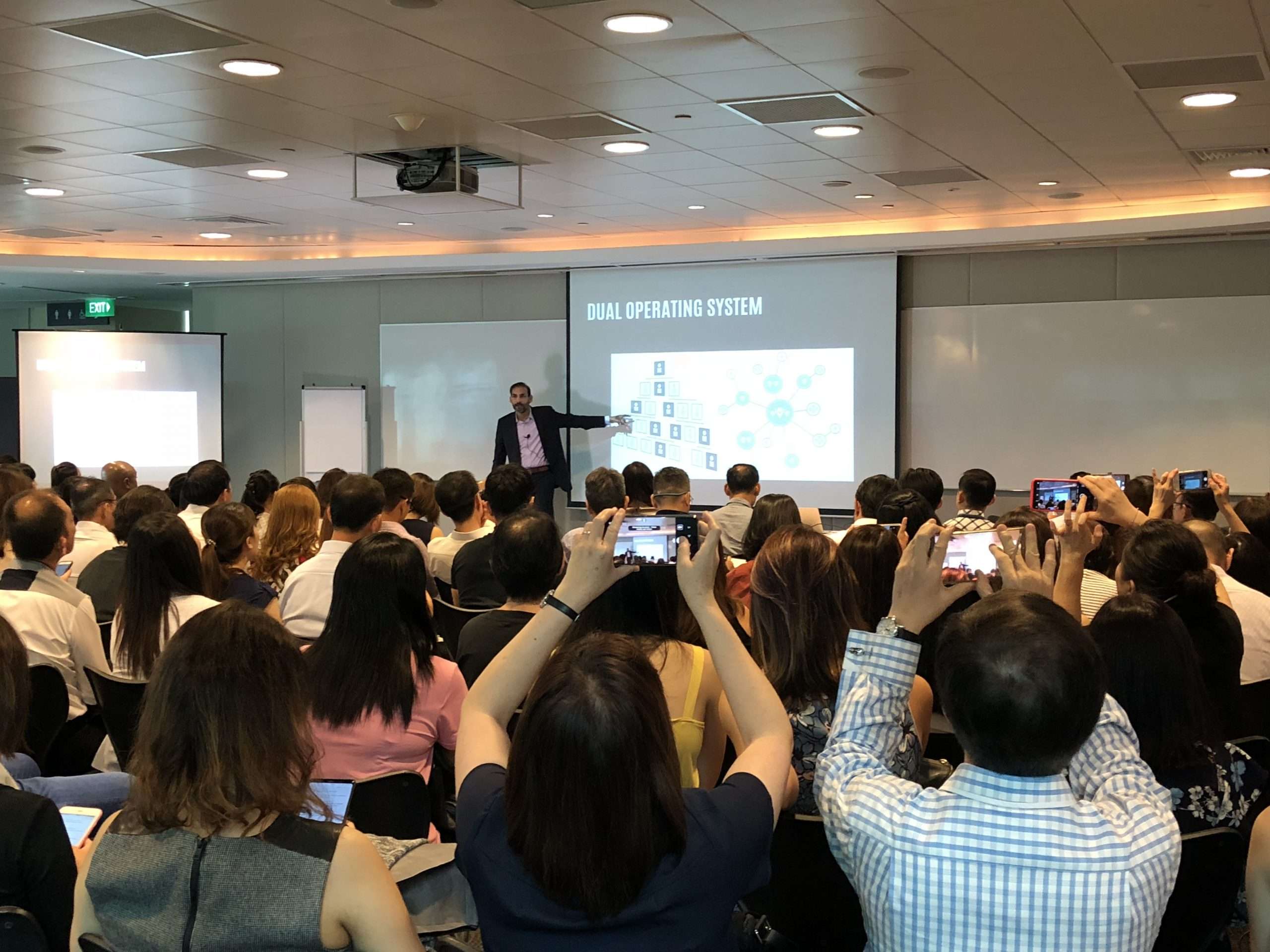
At the seminar, Mr. Gaurav Gupta (Affiliate, Kotter International) guided our participants through Kotter’s 8-step process and 4 key leadership principles. Our participants also took away insightful learnings on how organisations can successfully create synergy & engagement amongst their employees to support change and transformation.
Everyone took away a preview of the knowledge of the world’s renowned change and leadership expert – Dr. John Kotter from the seminar. Hear what some of our participants say about the seminar.
Want to know more about our Masterclasses? Visit http://bit.ly/JohnKotter or talk to our friendly Course Consultants at NTUC Trade Union House, Devan Nair Institute for Employment and Employability, LHUB @ Tampines Mall or any of our roadshows islandwide for more information.
You Might Like This
A Practical Guide to Safe Food Handling for Home-Based Food Businesses
Starting a home-based food business requires more than just good recipes. Maintaining proper hygiene standards is essential to protect customers and build trust. A food safety certificate demonstrates that you understand how to handle food safely and responsibly. This guide explains the fundamentals of food hygiene for home-based food businesses. It covers safe handling practices, storage methods, and basic regulations. It also highlights how training such as a WSQ Food Safety Course Level 1 supports compliance and improves food safety knowledge. Why Food Safety Matters for Home-Based Food Businesses Operating from home does not reduce the responsibility to maintain high food safety standards. In fact, home-based environments can present unique risks if hygiene practices are not carefully managed. Food safety is critical because even small mistakes can lead to serious consequences. Poor handling practices can affect both customer health and business credibility. Key risks include: Food contamination caused by improper handling Health issues such as foodborne illnesses Loss of customer trust and potential complaints Legal consequences for failing to meet standards Maintaining proper hygiene ensures that food remains safe from preparation to consumption. This makes it essential to understand the core principles of safe food handling. Core Principles of Safe Food Handling Safe food handling starts with a clear understanding of hygiene fundamentals. These principles form the foundation of any responsible food business. Every food handler should follow essential practices to reduce risks and maintain quality. Important principles include: Maintaining strict personal hygiene, including handwashing and clean attire Preventing cross-contamination between raw and cooked foods Controlling food temperatures to avoid bacterial growth Keeping preparation areas clean and sanitised These practices are often covered in a basic food and hygiene course and reinforced through structured food safety training. Learning these principles helps ensure consistency and reduces the likelihood of errors. Once these basics are in place, the next step is applying them to food storage and preparation. Safe Food Storage and Preparation Techniques Proper storage and preparation play a major role in maintaining food safety. Even high-quality ingredients can become unsafe if handled incorrectly. Understanding how to manage food at every stage is essential for home-based businesses. Best practices include: Storing perishable items at appropriate refrigeration temperatures Labeling food clearly and using a first-in, first-out approach Thawing food safely to prevent bacterial growth Cooking food thoroughly to safe internal temperatures Avoiding contact between raw and ready-to-eat foods These practices are emphasised in a level 1 food safety course and reinforced through programmes such as a food safety course level 1 SkillsFuture. They provide practical knowledge that can be applied daily. With proper storage and preparation in place, understanding regulations becomes the next important step. Understanding Basic Food Safety Regulations Home-based food businesses must still comply with relevant food safety guidelines. While requirements may vary, basic standards are consistent. Being aware of these expectations helps prevent compliance issues and ensures smoother operations. Key considerations include: Meeting hygiene standards required for food preparation Understanding when licensing may be necessary Preparing for possible inspections or audits Keeping records of food handling practices where required Obtaining a food hygiene certificate in Singapore demonstrates knowledge of these standards. Training such as a WSQ food hygiene course helps individuals understand their responsibilities and apply them effectively. With regulatory awareness established, structured training becomes a valuable tool for long-term success. How Training Supports Food Safety Compliance Formal training plays a significant role in improving food safety knowledge. It provides structured guidance and practical skills that are difficult to develop through trial and error. Programmes like the WSQ Food Safety Course Level 1 are designed to equip individuals with essential competencies. Benefits of training include: Gaining a recognised food safety certificate Learning standardised procedures for safe food handling Building confidence in maintaining hygiene practices Reducing risks associated with food preparation Consistent training ensures that food safety becomes a routine part of operations. This helps home-based businesses maintain quality and reliability over time. Build Confidence in Food Safety Standards Safe food handling is a fundamental requirement for any home-based food business. From hygiene practices to proper storage and regulatory awareness, every step plays a role in ensuring food safety. Earning a food safety certificate and completing structured training such as a WSQ Food Safety Course Level 1 provides a strong foundation for maintaining high standards. It supports both compliance and customer trust. To strengthen your food safety knowledge and build confidence in your operations, explore professional training programmes offered by NTUC LearningHub. .document h1, .document h2, .document h3, .document h4, .document h5 { color: #1c1c1c; font-weight: 700; line-height: 1.1; margin: 30px 0 15px; } .document ul li { position: relative; margin-left: 15px; padding-bottom: 5px; } .document p { margin: 0 0 8px; } .faq-container { max-width: 100%; margin: 0 auto; } .faq-title { text-align: left; font-weight: 600; margin-bottom: 30px; } .faq-item { background: #fff; border-radius: 10px; margin-bottom: 10px; box-shadow: 0 4px 10px rgba(0,0,0,0.1); overflow: hidden; transition: all 0.3s ease; } .faq-question { background: #fff; border: none; width: 100%; text-align: left; padding: 18px 20px; font-size: 1rem; font-weight: 500; cursor: pointer; display: flex; align-items: center; justify-content: space-between; color: #222; transition: background 0.3s ease; } .faq-question:hover { background: #f0f0f0; } .faq-answer { max-height: 0; overflow: hidden; background: #fafafa; transition: all 0.4s ease; padding: 0 20px; line-height: 1.6; color: #555; } .faq-item.active .faq-answer { max-height: 300px; padding: 15px 20px; } .faq-icon { font-size: 20px; transition: transform 0.3s ease; } .faq-item.active .faq-icon { transform: rotate(45deg); } .esg-table{ width:100%; border-collapse:collapse; } .esg-table th, .esg-table td{ border:1px solid #000; padding:14px; text-align:left; vertical-align:top; } .esg-table th{ background:#d9d9d9; font-weight:700; font-size:18px; } .esg-table td:first-child{ font-weight:700; width:30%; } .highlight{ background:yellow; padding:2px 4px; } .fee-table{ width:100%; border-collapse:collapse; font-family:Arial, sans-serif; } .fee-table th, .fee-table td{ border:1px solid #000; padding:16px; text-align:left; vertical-align:top; } .fee-table th{ background:#d9d9d9; font-size:18px; font-weight:700; } .table-container { width: 100%; overflow-x: auto; margin: 20px 0; } .custom-table { width: 100%; border-collapse: collapse; font-family: Arial, sans-serif; min-width: 500px; } .custom-table th { background-color: #1f3c88; color: #fff; text-align: left; padding: 12px; font-size: 16px; } .custom-table td { padding: 12px; border-bottom: 1px solid #ddd; font-size: 15px; } .custom-table tr:nth-child(even) { background-color: #f9f9f9; } .custom-table tr:hover { background-color: #f1f5ff; } /* Mobile */ @media (max-width: 600px) { .custom-table th, .custom-table td { padding: 10px; font-size: 14px; } } const faqs = document.querySelectorAll(".faq-item"); faqs.forEach((faq) => { faq.querySelector(".faq-question").addEventListener("click", () => { faqs.forEach((item) => { if (item !== faq) item.classList.remove("active"); }); faq.classList.toggle("active"); }); }); { "@context": "https://schema.org", "@type": "Article", "headline": "Food Safety Certificate for Home Food Businesses ", "description": "Get a Food safety certificate with WSQ food safety course level 1. Learn food hygiene, safe handling, and compliance for home-based food businesses in Singapore. ", "author": { "@type": "Person", "name": "AUTHOR NAME" }, "datePublished": "2026-1-22", "dateModified": "2025-10-14", "publisher": { "@type": "Organization", "name": "NTUC LearningHub", "logo": { "@type": "ImageObject", "url": "https://www.ntuclearninghub.com/o/ntuclearninghub-theme/images/ntuc-learning-hub-logo.png" } }, "keywords": [ "electric vehicles", "EV adoption Singapore", "job market", "skills training", "green jobs", "policy" ], "mainEntityOfPage": { "@type": "WebPage", "@id": "https://www.ntuclearninghub.com/en/-/how-the-empowering-transformational-and-insightful-coaching-modules-prepare-you-for-career-success" } } { "@context": "https://schema.org", "@type": "FAQPage", "mainEntity": [ { "@type": "Question", "name": "What is the PCC Level 2 programme and who is it for? ", "acceptedAnswer": { "@type": "Answer", "text": "The PCC Level 2 programme is an advanced ICF-accredited coach training course designed for ACC-certified coaches who want to deepen their skills and achieve Professional Certified Coach (PCC) accreditation. It’s ideal for professionals seeking to advance their coaching careers and lead meaningful change. " } }, { "@type": "Question", "name": "What are the core modules in the PCC Level 2 programme? ", "acceptedAnswer": { "@type": "Answer", "text": "The programme features three key modules: The Empowering Coach (building awareness and authenticity), The Transformational Coach (coaching for mindset shifts and sustainable change), and The Insightful Coach (expanding perspective and precision). Each module develops specific coaching competencies aligned with ICF standards. " } }, { "@type": "Question", "name": "How does the programme prepare coaches for real-world applications? ", "acceptedAnswer": { "@type": "Answer", "text": "Through live workshops, practice labs, mentor coaching, and feedback, the PCC Level 2 programme equips participants with practical skills to handle corporate leadership, team coaching, HR, and entrepreneurial contexts, ensuring they can apply coaching effectively in Singapore’s professional landscape. " } }, { "@type": "Question", "name": "How do the Empowering, Transformational, and Insightful modules work together in coaching development? ", "acceptedAnswer": { "@type": "Answer", "text": "These three modules build progressively: the Empowering Coach strengthens presence and client engagement, the Transformational Coach equips you to facilitate deep, lasting change, and the Insightful Coach enhances perspective and precision—together, they prepare you for mastery at the PCC level. " } }, { "@type": "Question", "name": "How does this programme enhance a coach’s career and professional credibility?", "acceptedAnswer": { "@type": "Answer", "text": "By completing the Empowering, Transformational, and Insightful modules, coaches strengthen their competencies, gain international recognition, and increase their opportunities for executive coaching assignments, leadership development roles, and career advancement in diverse industries. " } } ] }
Using Agentic AI for Business Process Workflow Automation
Modern organisations are rethinking how work gets done. At the centre of this shift is business process workflow automation, which is moving beyond static rules into intelligent, adaptive systems. Traditional automation handled repetitive tasks well, but it often struggled with complexity and change. Agentic AI introduces a new layer of capability. It enables systems to make decisions, adapt to new inputs, and execute workflows with minimal human intervention. This shift is not just about efficiency. It is about transforming how processes operate at scale. As businesses look to improve productivity and responsiveness, understanding how agentic AI enhances business process workflow automation becomes increasingly important. What Is Business Process Workflow Automation At its core, business process workflow automation refers to the use of technology to execute structured tasks without manual intervention. These workflows typically follow predefined rules and sequences, ensuring consistency and efficiency across operations. Traditional automation systems rely heavily on fixed logic. While effective for predictable tasks, they often require constant updates when conditions change. This creates limitations in dynamic environments. Key benefits of automation include: Reduced manual effort and repetitive work Improved accuracy and fewer human errors Faster execution of routine processes Enhanced visibility into operations Despite these advantages, rule-based systems can struggle with exceptions and evolving scenarios. This is where more advanced approaches begin to play a role, particularly those driven by AI capabilities. How Agentic AI Transforms Workflow Automation Agentic AI represents a significant advancement in business process workflow automation. Unlike traditional systems, it is designed to act autonomously, make decisions, and adapt workflows based on real-time data. Instead of following rigid rules, agentic AI evaluates context and determines the best course of action. This allows workflows to remain effective even when conditions change. Key capabilities include: Context-aware decision making based on real-time inputs Dynamic workflow adjustments without manual reprogramming Continuous learning from past interactions Integration across multiple systems and platforms These features enable organisations to move beyond static automation into intelligent operations. As a result, workflows become more resilient and responsive, opening the door to broader applications across business functions. Real-World Applications of AI Workflow Automation The impact of AI workflow automation can be seen across multiple industries and departments. By combining automation with decision-making capabilities, organisations can streamline complex processes more effectively. Common applications include: Customer service automation that handles queries and escalations Financial workflows for reporting, approvals, and compliance checks Human resource processes such as onboarding and training coordination Supply chain optimisation through demand forecasting and logistics planning These examples highlight how AI-driven workflows improve both speed and accuracy. They also reduce the need for manual oversight in routine operations. As adoption grows, organisations are increasingly exploring how to implement these systems in a structured and scalable way. How to Adopt AI Automation in Your Organisation Adopting AI-driven workflows requires a clear strategy. While the technology offers strong potential, successful implementation depends on aligning it with organisational needs and capabilities. Practical steps include: Identifying processes that benefit most from automation Selecting tools that support intelligent decision-making Upskilling teams through an Agentic AI course Continuously monitoring and refining workflows Training plays a critical role in this process. Enrolling in an AI automation course helps individuals understand both the technical and operational aspects of automation. This ensures that teams can design, deploy, and manage workflows effectively. With the right foundation, organisations can gradually expand their use of business process workflow automation to achieve long-term efficiency gains. The Future of Business Process Workflow Automation The future of business process workflow automation is closely tied to advancements in AI. As agentic systems become more sophisticated, workflows will continue to evolve beyond simple task execution. Emerging trends include: Hyperautomation that connects multiple systems and processes Increased collaboration between humans and AI systems Predictive workflows that anticipate needs and outcomes Fully autonomous decision-making environments These developments point toward a more adaptive and intelligent operational landscape. Organisations that embrace these changes early are better positioned to remain competitive. Transform Your Workflows with the Right Skills The shift toward AI-driven workflows is already underway. Organisations that invest in business process workflow automation today are better equipped to handle complexity and scale operations efficiently. To stay ahead, developing the right skills is essential. Structured learning and practical training can help individuals and teams understand how to design and manage intelligent workflows. Explore how NTUC LearningHub can support your journey with relevant training solutions and build the expertise needed to implement AI-powered automation effectively. .document h1, .document h2, .document h3, .document h4, .document h5 { color: #1c1c1c; font-weight: 700; line-height: 1.1; margin: 30px 0 15px; } .document ul li { position: relative; margin-left: 15px; padding-bottom: 5px; } .document p { margin: 0 0 8px; } .faq-container { max-width: 100%; margin: 0 auto; } .faq-title { text-align: left; font-weight: 600; margin-bottom: 30px; } .faq-item { background: #fff; border-radius: 10px; margin-bottom: 10px; box-shadow: 0 4px 10px rgba(0,0,0,0.1); overflow: hidden; transition: all 0.3s ease; } .faq-question { background: #fff; border: none; width: 100%; text-align: left; padding: 18px 20px; font-size: 1rem; font-weight: 500; cursor: pointer; display: flex; align-items: center; justify-content: space-between; color: #222; transition: background 0.3s ease; } .faq-question:hover { background: #f0f0f0; } .faq-answer { max-height: 0; overflow: hidden; background: #fafafa; transition: all 0.4s ease; padding: 0 20px; line-height: 1.6; color: #555; } .faq-item.active .faq-answer { max-height: 300px; padding: 15px 20px; } .faq-icon { font-size: 20px; transition: transform 0.3s ease; } .faq-item.active .faq-icon { transform: rotate(45deg); } .esg-table{ width:100%; border-collapse:collapse; } .esg-table th, .esg-table td{ border:1px solid #000; padding:14px; text-align:left; vertical-align:top; } .esg-table th{ background:#d9d9d9; font-weight:700; font-size:18px; } .esg-table td:first-child{ font-weight:700; width:30%; } .highlight{ background:yellow; padding:2px 4px; } .fee-table{ width:100%; border-collapse:collapse; font-family:Arial, sans-serif; } .fee-table th, .fee-table td{ border:1px solid #000; padding:16px; text-align:left; vertical-align:top; } .fee-table th{ background:#d9d9d9; font-size:18px; font-weight:700; } .table-container { width: 100%; overflow-x: auto; margin: 20px 0; } .custom-table { width: 100%; border-collapse: collapse; font-family: Arial, sans-serif; min-width: 500px; } .custom-table th { background-color: #1f3c88; color: #fff; text-align: left; padding: 12px; font-size: 16px; } .custom-table td { padding: 12px; border-bottom: 1px solid #ddd; font-size: 15px; } .custom-table tr:nth-child(even) { background-color: #f9f9f9; } .custom-table tr:hover { background-color: #f1f5ff; } /* Mobile */ @media (max-width: 600px) { .custom-table th, .custom-table td { padding: 10px; font-size: 14px; } } { "@context": "https://schema.org", "@type": "Article", "headline": "Business Process Workflow Automation with Agentic AI ", "description": "Explore how business process workflow automation improves efficiency using Agentic AI, enabling intelligent decision-making and autonomous AI-driven workflows. ", "author": { "@type": "Person", "name": "AUTHOR NAME" }, "datePublished": "2026-1-22", "dateModified": "2025-10-14", "publisher": { "@type": "Organization", "name": "NTUC LearningHub", "logo": { "@type": "ImageObject", "url": "https://www.ntuclearninghub.com/o/ntuclearninghub-theme/images/ntuc-learning-hub-logo.png" } }, "keywords": [ "electric vehicles", "EV adoption Singapore", "job market", "skills training", "green jobs", "policy" ], "mainEntityOfPage": { "@type": "WebPage", "@id": "https://www.ntuclearninghub.com/en/-/how-can-drones-support-workplace-operations-" } }
How a Nutrition Course in Singapore Supports Professional Development
A nutrition course in Singapore plays an increasingly important role in shaping careers within health, wellness, and food-related industries. As awareness of nutrition grows, individuals are seeking structured learning to build relevant skills and knowledge that support long-term professional development. From understanding dietary needs to applying practical strategies like meal planning, these courses provide a strong foundation for those looking to enter or advance in this field. Professionals across industries are recognising the value of nutrition expertise. Whether pursuing a nutritionist course in Singapore or exploring a broader course of food and nutrition, learners gain access to knowledge that is both applicable and adaptable. This makes nutrition a growing and practical field for career progression. The Growing Importance of Nutrition in Professional Roles Nutrition is no longer limited to healthcare settings. It is now relevant across various industries, including corporate wellness, fitness, hospitality, and education. This expanding relevance has increased demand for structured learning, such as a nutrition course in Singapore. Professionals are expected to understand how nutrition impacts performance, productivity, and overall well-being. This has led to a greater emphasis on foundational knowledge and practical application. Increased focus on preventive healthcare and lifestyle management Growing demand for workplace wellness programmes Integration of nutrition into fitness and coaching roles Rising consumer awareness around healthy eating habits A course of food and nutrition equips individuals with the ability to interpret dietary information and apply it effectively in real-world scenarios. This is especially valuable for those working in roles that influence others’ health choices. As nutrition becomes more embedded in professional environments, structured learning provides a clear pathway to develop relevant competencies that align with industry expectations. Key Skills Developed Through a Nutrition Course in Singapore Enrolling in a nutrition course in Singapore helps learners build a range of practical and theoretical skills. These skills are essential for applying nutrition knowledge in professional contexts and supporting informed decision-making. Courses are designed to balance foundational science with real-world application. This ensures that learners are prepared to handle diverse challenges in health and wellness roles. Understanding macronutrients and micronutrients Applying dietary guidelines in different contexts Developing effective meal planning strategies Assessing nutritional needs for individuals or groups Interpreting food labels and nutritional data A nutrition course in Singapore often includes structured modules that guide learners through progressive skill development. This allows individuals to build confidence while applying concepts in practical settings. For those pursuing a nutritionist course in Singapore, the focus may extend to personalised nutrition and client interaction. This helps learners develop communication and advisory skills, which are essential in many professional roles. These capabilities enable individuals to contribute meaningfully in environments where nutrition knowledge supports better outcomes, setting the stage for broader applications in the workplace. Practical Applications in Workplace Settings The knowledge gained from a nutrition course in Singapore can be applied across a wide range of workplace scenarios. This makes it a versatile qualification that supports career development in multiple industries. Professionals can use their training to improve processes, support clients, or enhance organisational initiatives related to health and well-being. Designing workplace wellness programmes Supporting fitness and health coaching initiatives Improving menu planning in food service environments Advising on balanced diets and healthy eating practices Contributing to public health or community outreach projects A healthy cooking course often complements nutrition education by providing practical skills in food preparation. This combination allows individuals to bridge the gap between theory and application. The integration of meal planning into daily operations is particularly valuable in roles that involve food service or client care. It ensures that nutritional guidelines are translated into actionable outcomes. These practical applications demonstrate how structured learning supports real-world impact, making nutrition education a relevant and valuable investment for professional growth. Career Opportunities and Industry Relevance Completing a nutrition course in Singapore opens up a variety of career pathways. As the field continues to grow, individuals with nutrition knowledge are increasingly sought after in both traditional and emerging roles. The versatility of a course in food and nutrition allows learners to explore opportunities that align with their interests and professional goals. Nutrition advisor or consultant roles Fitness and wellness coaching positions Food service and menu planning roles Corporate wellness programme coordination Community health and education initiatives A nutritionist course in Singapore may provide more specialised knowledge, supporting career advancement in advisory or client-focused roles. This helps individuals differentiate themselves in a competitive job market. The availability of a nutrition course in Singapore SkillsFuture also makes it more accessible for working professionals to upskill while managing existing responsibilities. As industries continue to prioritise health and well-being, nutrition expertise remains relevant. This creates a stable foundation for long-term career development while encouraging continuous learning and skill enhancement. How Structured Learning Supports Continuous Development Structured learning plays a critical role in ensuring that individuals remain updated with evolving nutrition knowledge. A nutrition course in Singapore provides a clear framework for acquiring and applying this knowledge effectively. Courses are designed to support ongoing development, making it easier for learners to build on existing skills and adapt to changing industry requirements. Access to updated research and best practices Opportunities for practical application and assessment Guidance from experienced instructors Structured progression from basic to advanced concepts Flexibility through programmes such as a nutrition course in Singapore A healthy cooking course can further enhance this learning by reinforcing practical skills. This combination ensures that learners are not only knowledgeable but also capable of implementing what they have learned. Continuous development is essential in a field where dietary trends, research findings, and consumer expectations are constantly evolving. Structured courses provide the stability and direction needed to navigate these changes effectively. This approach ensures that individuals remain competitive and capable in their roles, while also supporting long-term professional growth. Take the Next Step Towards a Health-Focused Career A nutrition course in Singapore offers a structured and practical pathway for individuals looking to build or enhance their careers in health and wellness. With growing industry demand and diverse applications, nutrition knowledge provides a strong foundation for professional development. If you are ready to strengthen your skills and explore new opportunities, consider enrolling with NTUC LearningHub to take the next step in your career journey. .document h1, .document h2, .document h3, .document h4, .document h5 { color: #1c1c1c; font-weight: 700; line-height: 1.1; margin: 30px 0 15px; } .document ul li { position: relative; margin-left: 15px; padding-bottom: 5px; } .document p { margin: 0 0 8px; } .faq-container { max-width: 100%; margin: 0 auto; } .faq-title { text-align: left; font-weight: 600; margin-bottom: 30px; } .faq-item { background: #fff; border-radius: 10px; margin-bottom: 10px; box-shadow: 0 4px 10px rgba(0,0,0,0.1); overflow: hidden; transition: all 0.3s ease; } .faq-question { background: #fff; border: none; width: 100%; text-align: left; padding: 18px 20px; font-size: 1rem; font-weight: 500; cursor: pointer; display: flex; align-items: center; justify-content: space-between; color: #222; transition: background 0.3s ease; } .faq-question:hover { background: #f0f0f0; } .faq-answer { max-height: 0; overflow: hidden; background: #fafafa; transition: all 0.4s ease; padding: 0 20px; line-height: 1.6; color: #555; } .faq-item.active .faq-answer { max-height: 300px; padding: 15px 20px; } .faq-icon { font-size: 20px; transition: transform 0.3s ease; } .faq-item.active .faq-icon { transform: rotate(45deg); } .esg-table{ width:100%; border-collapse:collapse; } .esg-table th, .esg-table td{ border:1px solid #000; padding:14px; text-align:left; vertical-align:top; } .esg-table th{ background:#d9d9d9; font-weight:700; font-size:18px; } .esg-table td:first-child{ font-weight:700; width:30%; } .highlight{ background:yellow; padding:2px 4px; } .fee-table{ width:100%; border-collapse:collapse; font-family:Arial, sans-serif; } .fee-table th, .fee-table td{ border:1px solid #000; padding:16px; text-align:left; vertical-align:top; } .fee-table th{ background:#d9d9d9; font-size:18px; font-weight:700; } .table-container { width: 100%; overflow-x: auto; margin: 20px 0; } .custom-table { width: 100%; border-collapse: collapse; font-family: Arial, sans-serif; min-width: 500px; } .custom-table th { background-color: #1f3c88; color: #fff; text-align: left; padding: 12px; font-size: 16px; } .custom-table td { padding: 12px; border-bottom: 1px solid #ddd; font-size: 15px; } .custom-table tr:nth-child(even) { background-color: #f9f9f9; } .custom-table tr:hover { background-color: #f1f5ff; } /* Mobile */ @media (max-width: 600px) { .custom-table th, .custom-table td { padding: 10px; font-size: 14px; } } { "@context": "https://schema.org", "@type": "Article", "headline": "A Nutrition Course in Singapore Supports Career Growth", "description": "Take a nutrition course Singapore to gain skills in healthy cooking, meal planning, and nutrition science, supporting growth in health and wellness careers.", "author": { "@type": "Person", "name": "AUTHOR NAME" }, "datePublished": "2026-1-22", "dateModified": "2025-10-14", "publisher": { "@type": "Organization", "name": "NTUC LearningHub", "logo": { "@type": "ImageObject", "url": "https://www.ntuclearninghub.com/o/ntuclearninghub-theme/images/ntuc-learning-hub-logo.png" } }, "keywords": [ "electric vehicles", "EV adoption Singapore", "job market", "skills training", "green jobs", "policy" ], "mainEntityOfPage": { "@type": "WebPage", "@id": "https://www.ntuclearninghub.com/en/-/how-can-drones-support-workplace-operations-" } }